

Four Eyes Principle
Designing governance controls for regulated enterprise teams.
Role: Senior UX Designer
Team: Product, Engineering
Platform: Enterprise Saas
Focus: Content Governance
Workflow and Publish Rule Compliance
Enterprise customers in regulated industries needed stronger moderation, governance, and accountability controls.
The challenge was not only preventing self publishing, but also introducing safeguards across Workflow stages and Publish Rules without making everyday work more difficult.


Why this mattered
Finance and healthcare customers had strict governance needs. The person who edits content should not be the same person who approves or publishes it. This was not just a preference. For some regulated teams, it was a serious compliance requirement.
The problem
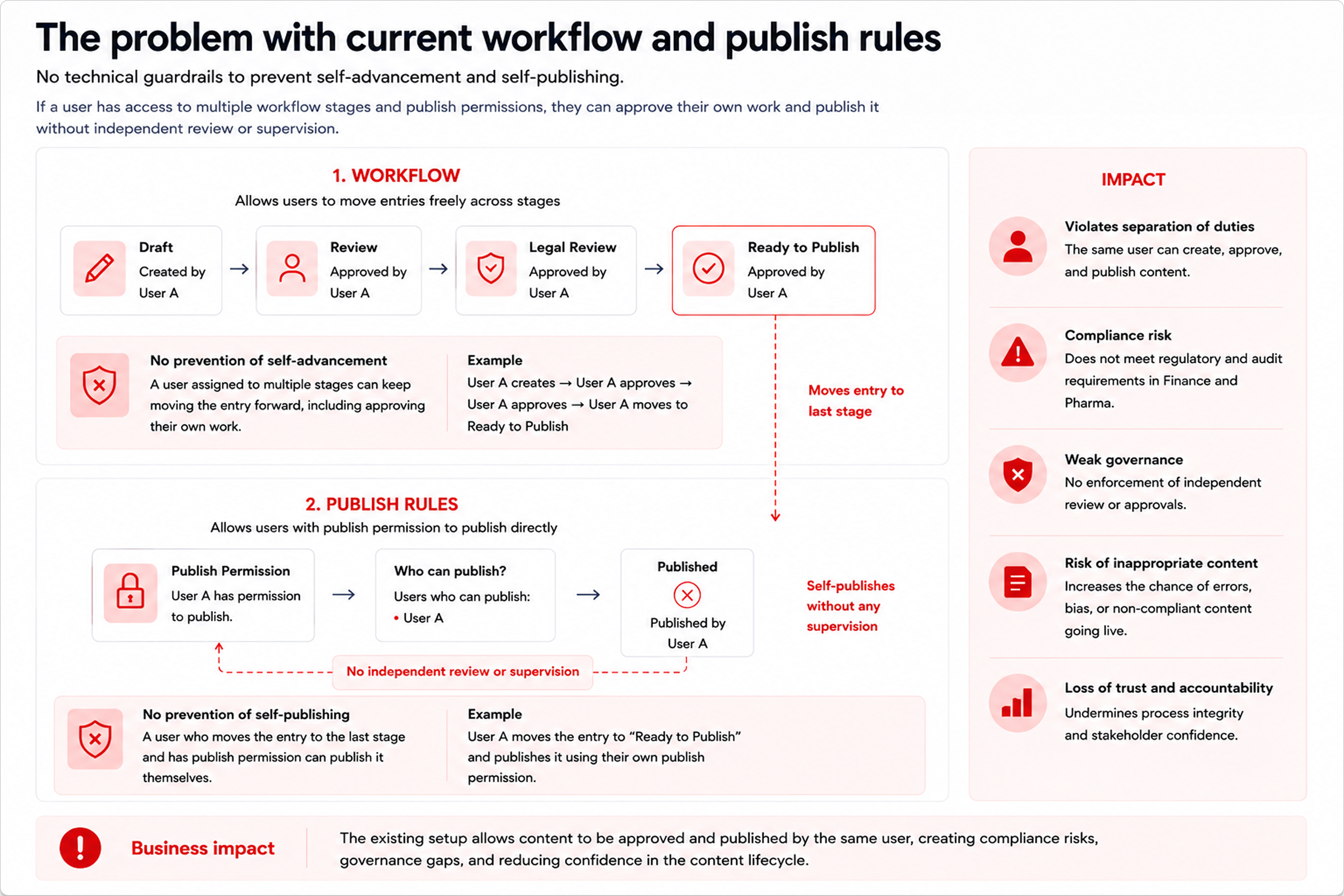
The original requirement was focused on preventing self publishing. But after deeper research, we realised that this only solved the final step. If the same person could move an entry through workflow stages without moderation, the governance gap still existed.
Key Challenges:
Lack of mandatory content review before publishing
Limited visibility into approval status
Maintaining governance without slowing publishing
Supporting enterprise compliance and accountability
Limitations of workflow and publish rules
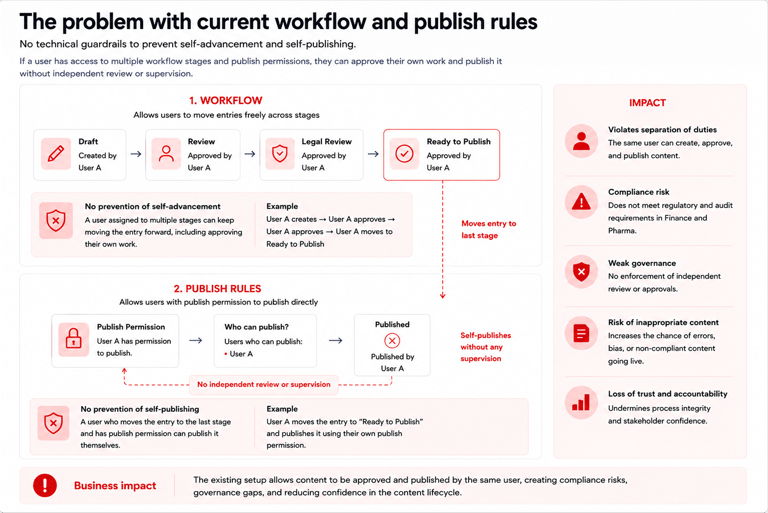
Existing workflows allowed the same user to create, approve, and publish content, creating compliance risks.
The tension
We had to solve the immediate compliance need without overcomplicating the workflow system. The challenge was to add control without making everyday publishing painful for legitimate teams.
What we did
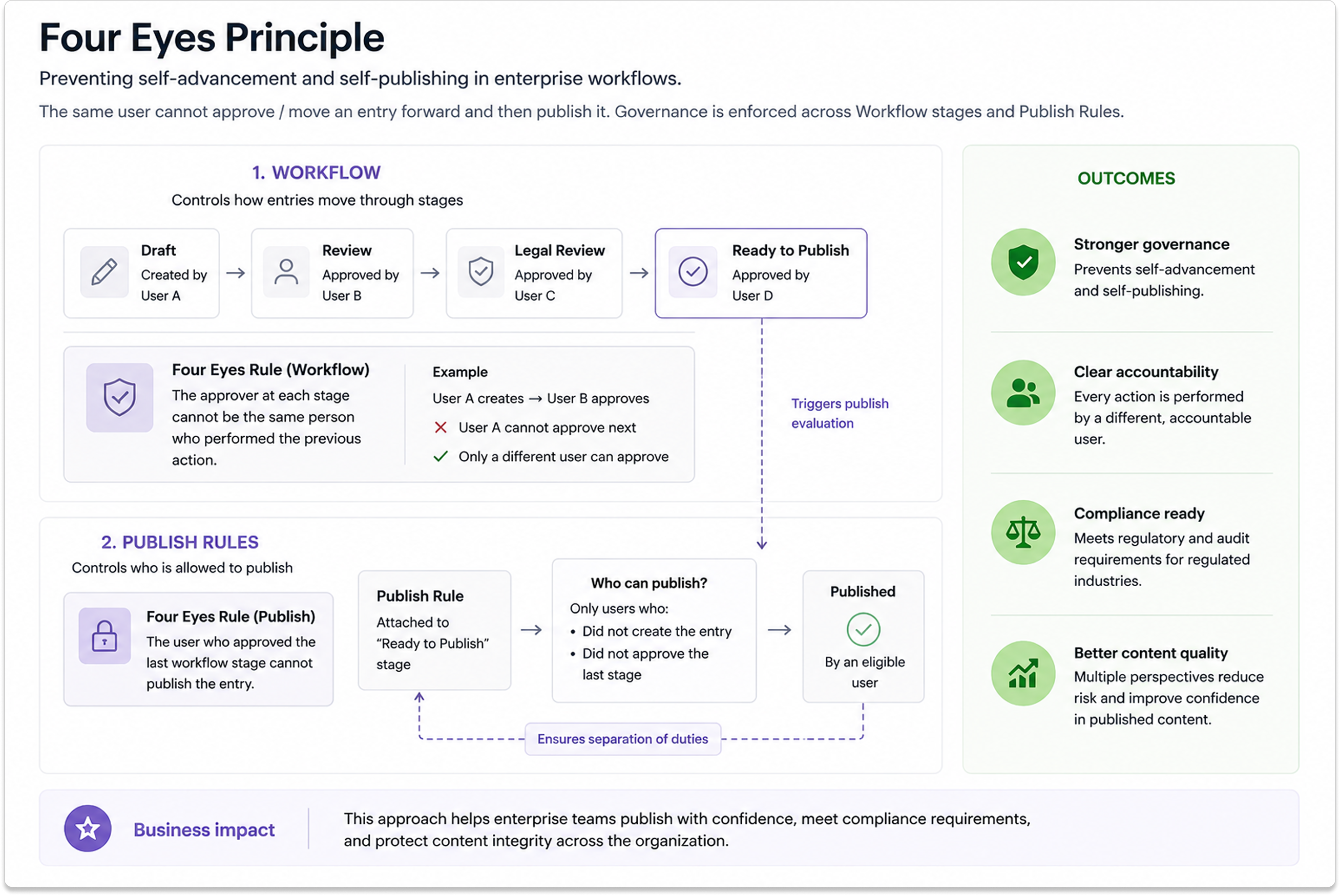
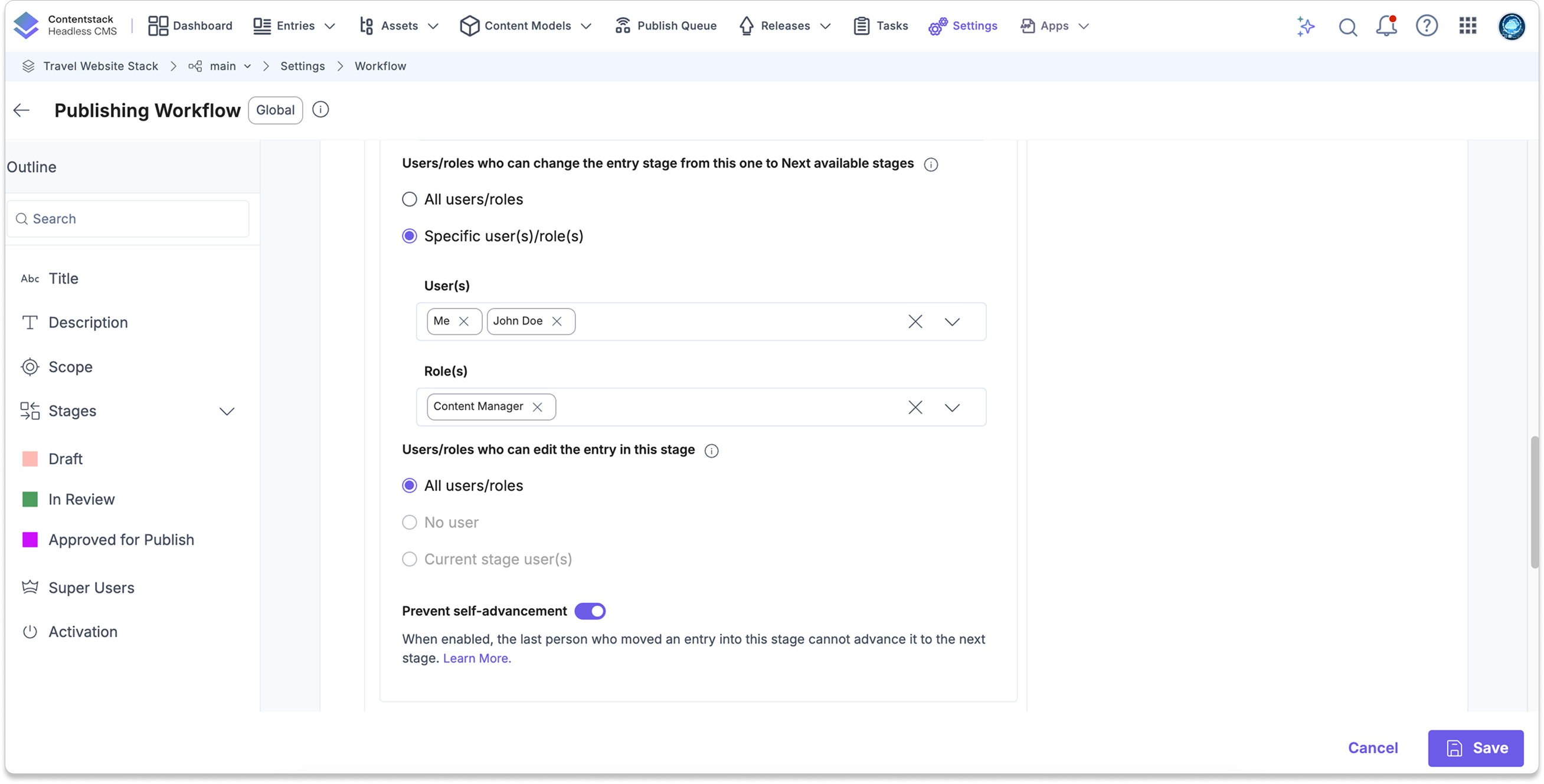
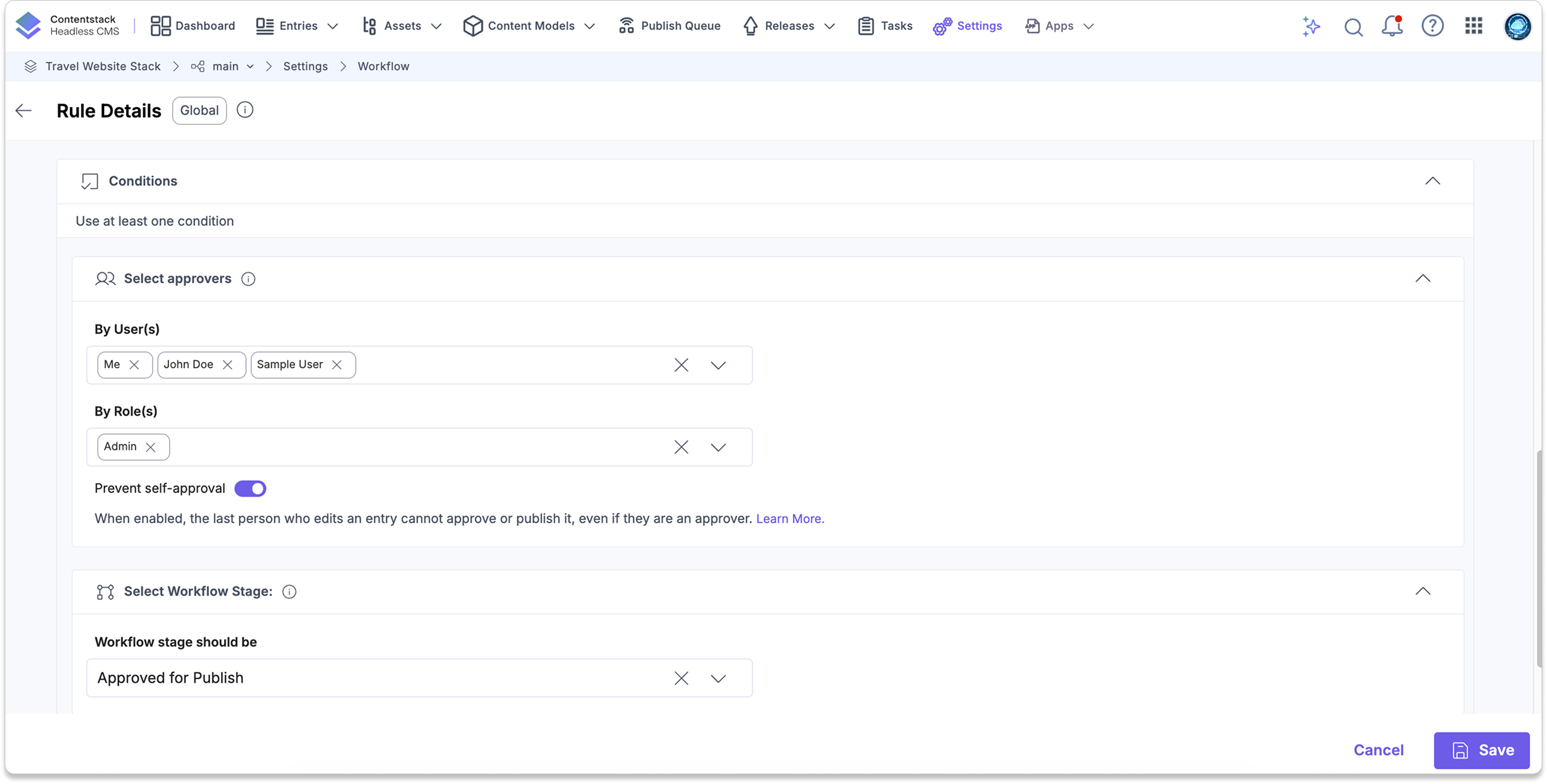
We created two layers of control. Prevent Self Advancement worked inside Workflow stages, so the person who moved an entry into a stage could not be the same person moving it forward. Prevent Self Approval worked in Publish Rules, so the last editor could not approve or publish the content themselves.
Key Contributions:
Designed the Four Eyes review and approval workflow
Created clear approval states and reviewer interactions
Simplified governance without disrupting publishing
Improved visibility throughout the review process
Defining logic for implementing compliance
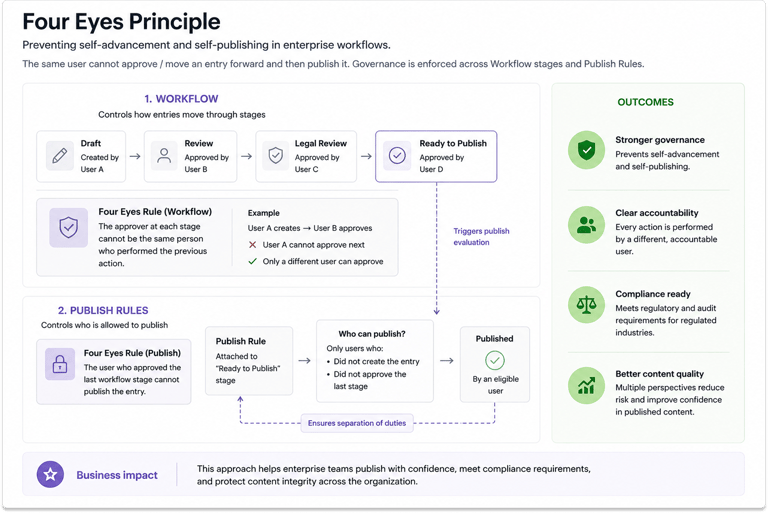
Mapped workflow and publishing logic to prevent self-advancement and self-publishing.
My role
I helped expand the problem from a publish restriction into a broader governance model across workflows and publishing.
Outcome
The solution helped support enterprise adoption in regulated industries by giving teams stronger moderation and approval controls.
Impact:
Strengthened content governance and accountability
Reduced the risk of unintended content publishing
Improved visibility throughout the approval lifecycle
Enabled structured enterprise review workflows
Final Designs
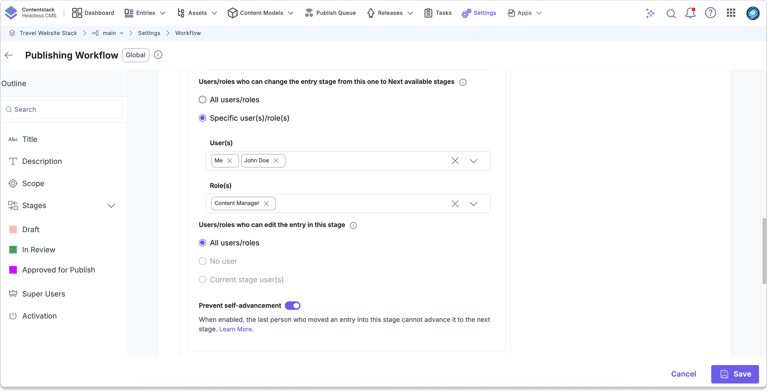
Workflow configuration preventing users from advancing content across consecutive stages.
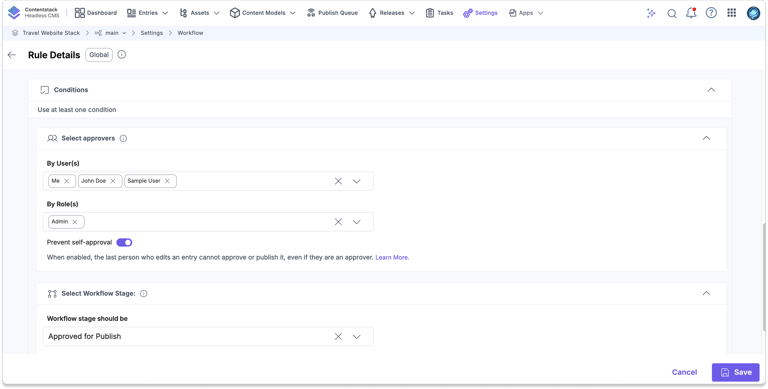
Publish rule configuration restricting users from publishing their own approved content.
Entry editor experience dynamically disabling workflow actions based on eligibility rules.
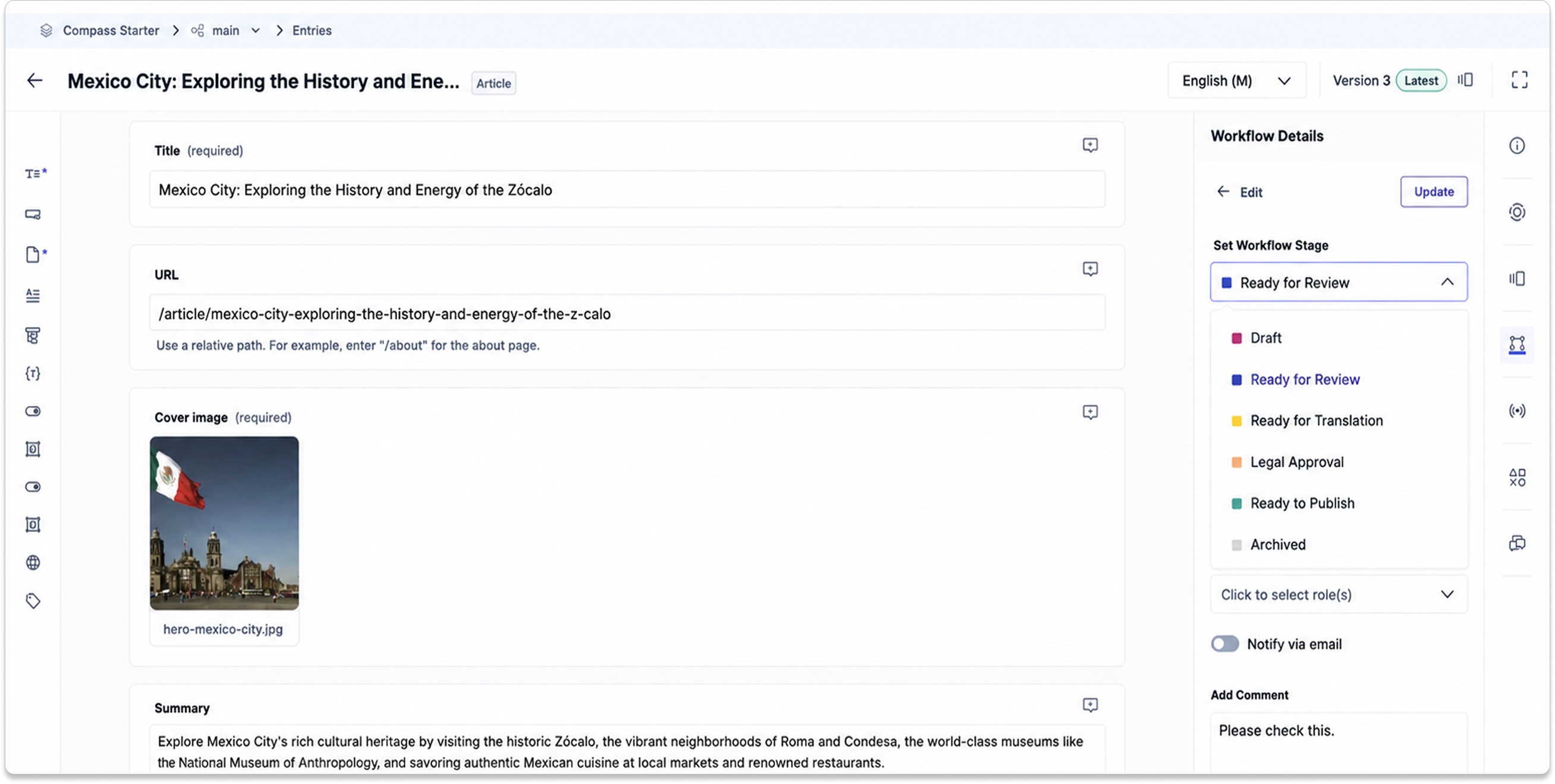
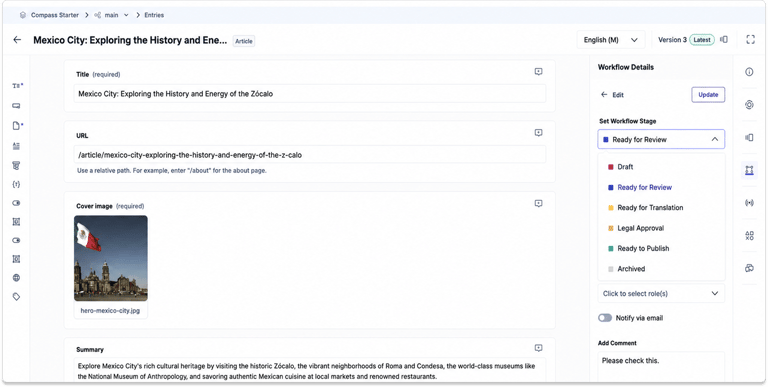
Publishing actions restricted when users do not meet approval requirements


Enabled adoption in compliance-heavy industries like Finance & Healthcare by meeting strict approval requirements & removing a key barrier for regulated customers.
What I would do differently today
We explored smarter future improvements like requiring at least two users, handling cases where an approver was unavailable, or managing situations where someone left the organization. Due to time restrictions, the first version handled some cases through error notifications. Today, I would design stronger fallback flows and recovery states.
Continue Exploring









Let's build better products.
Whether you're hiring for a product design role, building an enterprise platform, or looking to improve complex user experiences, I'd love to hear from you.