
Is the Norman Door Problem Only About the Door?
Looking beyond the obvious to understand what really shapes good design.
7/28/20262 min read
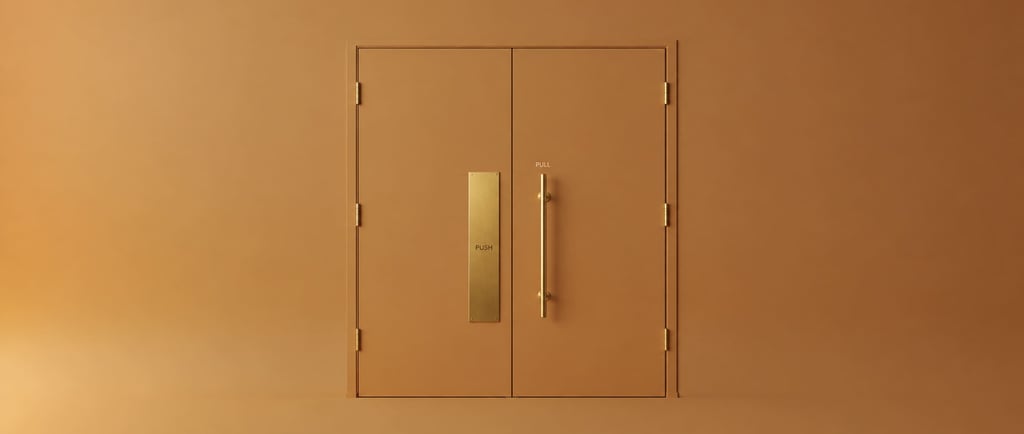
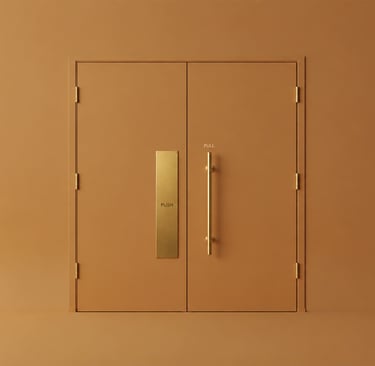
Why do I almost never hesitate before opening a door at home, but still find myself pushing when I should have pulled at some office entrances?
That question made me think about the Norman Door.
The Norman Door is a classic example in UX. A door that makes people stop and wonder whether they should push or pull. The usual solution is simple. If the door should be pushed, use a push plate. If it should be pulled, use a handle.
But while thinking about it, I wondered if we are focusing too much on the door itself.
At home, I rarely find myself confused about which way a door opens. Even if the handle looks similar, I can usually tell because of the frame, the hinges, and how the door is placed. Over time, I also become familiar with the space, so opening the door becomes almost automatic.
Now compare that to many office buildings or public places.
Large glass doors often have very few visual clues. People are entering for the first time, walking quickly, carrying bags, or simply not paying much attention. In those situations, the handle or push plate becomes the main clue because there is very little else to guide the user.
This made me wonder if the Norman Door discussion gives most of the attention to the handle or push plate, while another important part of the experience is the surrounding context. The frame, the hinges, the placement of the door, and even how familiar someone is with the environment all seem to help people understand what to do.
Of course, this is only an observation, not a conclusion. I have not tested it, and there may already be research around it. But it made me look at the problem differently.
So maybe the Norman Door problem is not just about the door.
Maybe good design is not created by one perfect signifier. It is created when several small clues work together so the user never has to stop and think.
The handle gets most of the attention.
But perhaps the frame has been quietly doing half the work all along.
—
Raviraj Samant
Build Taste